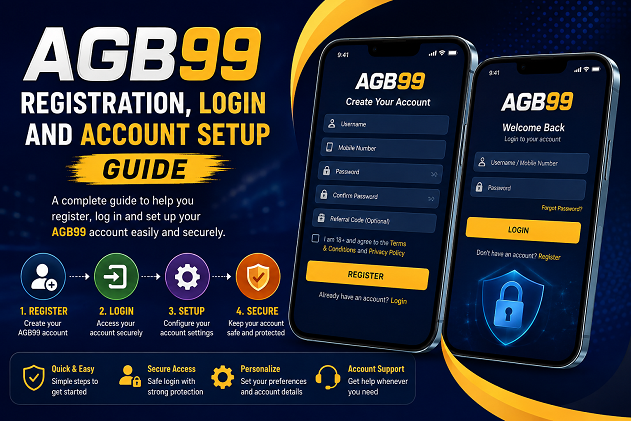
Security is one of the most important considerations when using any online gaming platform. Users may provide personal information during registration, create account credentials, access games through mobile devices, and potentially use payment services. For this reason, understanding account protection, privacy, application safety, transaction security, and responsible online behavior is essential before using AGB99.
AGB99 is associated with an online gaming platform that may provide casino-style games and account-management features. However, users should not assume that the presence of a security-related feature means an account is completely protected. Security is a shared responsibility between the platform and the user. A platform needs appropriate safeguards, while users need to protect passwords, devices, verification information, and financial details.
It is also important to distinguish between general security practices and independently verified claims about a particular platform. Unless users can confirm a specific security certification, license, encryption implementation, or privacy policy from an authoritative source, they should avoid treating such claims as guaranteed facts.
This guide provides a comprehensive security overview of AGB99, explaining what new and existing users should consider when creating an account, logging in, using mobile devices, handling payments, identifying scams, and protecting personal information.
Why Security Matters When Using AGB99
Online gaming accounts can contain information that should not be exposed to unauthorized individuals. Depending on the service, this may include contact details, login credentials, account history, transaction information, and identity-verification information.
An account that is poorly protected can become a target for phishing, credential theft, unauthorized access, or fraudulent transactions.
Security is particularly important for gaming accounts that involve real-money transactions. A compromised password can potentially provide an attacker with access to information or account functions that should remain private.
For this reason, users should treat an AGB99 account with the same general security awareness they would apply to any online account containing personal or financial information.
Start With Legal and Platform Verification
Security begins before registration.
Users should first determine whether online gambling is legally permitted in their jurisdiction and whether they are legally eligible to use the service.
They should also independently verify the platform they intend to access. The name of a gaming service can potentially be copied by unofficial websites, applications, social-media accounts, or individuals attempting to impersonate the service.
This distinction is particularly important when users search for an AGB99 login page or mobile application.
Before entering personal information, users should carefully verify that they are dealing with the intended service and not an imitation.
Understanding AGB99 Registration Security
Registration is the point where a user begins creating a digital identity on a gaming platform.
During AGB99 registration, users may be asked to provide account information and create login credentials. The exact information required can depend on the platform’s current procedures and applicable regulations.
Users should provide accurate information where legitimate verification is required.
They should also avoid creating an account through suspicious pages that arrive unexpectedly through messages, advertisements, or unknown links.
A secure registration process should be approached carefully rather than completed as quickly as possible.
Creating a Strong Password
Password security is one of the simplest and most important protections available to users.
A password should be unique to the gaming account. Reusing the same password across multiple websites creates additional risk because a breach of another service could expose credentials that are also used for AGB99.
A strong password should avoid predictable information such as:
- Name or nickname
- Date of birth
- Phone number
- Simple number sequences
- Common words or passwords
Users should consider using a reputable password manager to generate and store unique passwords where appropriate.
Most importantly, passwords should never be shared with another person.
Protecting AGB99 Login Credentials
The AGB99 login process should be treated as a sensitive account-access function.
Users should enter login credentials only into a platform interface they have independently verified.
They should be cautious about pages that look slightly different from what they normally use, contain unusual addresses, or suddenly request additional information.
A legitimate-looking design is not sufficient proof that a login page is authentic.
Users should also avoid saving passwords on shared computers and should log out after using a device that other people can access.
Two-Factor Authentication and Additional Security
If an online gaming platform provides two-factor authentication or another form of multi-factor authentication, users should consider enabling it.
Multi-factor authentication can add another layer of protection because accessing an account may require more than just a password.
However, users should still protect authentication codes and recovery information.
A verification code should never be provided to someone simply because they claim to be a support representative.
Users should also review security settings periodically to determine whether additional protection options are available.
Recognizing Phishing Attacks
Phishing is one of the most common threats facing online users.
A phishing message may imitate a legitimate gaming platform and claim that an account has been suspended, a withdrawal requires verification, or a special bonus is waiting.
The message may then ask the user to click a link and enter login credentials or financial information.
Users should be particularly cautious when a message creates urgency or fear.
Common warning signs include unexpected requests for passwords, verification codes, payment information, or urgent account action.
Instead of clicking an unsolicited link, users should independently navigate to the service through a trusted method.
Fake AGB99 Websites
Search engines and social platforms can contain websites that use familiar brand names.
A website displaying the name AGB99 should not automatically be assumed to be official.
Users should examine the domain carefully and be cautious about pages that contain unusual spelling, excessive redirects, suspicious advertisements, or requests for sensitive information.
A website can also copy another site’s visual appearance, so design alone should not be treated as proof of authenticity.
When sensitive information is involved, verification should take priority over convenience.
Fake AGB99 Applications
Mobile applications require similar caution.
A file named after AGB99 does not necessarily originate from the legitimate service. Unofficial APK files can potentially contain malicious software or altered functionality.
Users should verify the source of an application before installation.
Applications that request permissions unrelated to their apparent purpose should receive additional scrutiny.
Users should also avoid installing modified versions that claim to provide special advantages, unlimited rewards, or access to restricted functions.
Such claims can be signs of unsafe or fraudulent software.
Mobile Device Security
The security of an AGB99 app account depends partly on the security of the smartphone itself.
A phone that has no screen lock or contains outdated software can create unnecessary exposure.
Users should use an appropriate screen lock and keep the device operating system updated.
Applications should also be updated when legitimate security updates become available.
If a phone is lost or stolen, users should use the device’s built-in security and account-management tools to protect access.
Public Wi-Fi and Account Security
Public Wi-Fi can be convenient, but users should be cautious when accessing sensitive accounts through unfamiliar networks.
A network’s name does not necessarily prove that it is legitimate or secure.
Users should avoid performing sensitive account or payment operations through networks they do not trust whenever possible.
A private, trusted connection is generally preferable for entering account credentials or handling financial information.
Browser Security
Users who access AGB99 through a browser should keep the browser updated.
Security updates can address vulnerabilities that attackers might otherwise exploit.
Users should also be cautious about browser extensions, downloads, pop-ups, and redirects.
Unknown extensions should not be installed simply because they claim to improve gaming performance or provide special account functions.
Clearing saved credentials from shared devices is another useful security practice.
Protecting Personal Information
Users should think carefully about the information they share.
Not every person claiming to represent a gaming platform needs access to personal information.
Passwords, authentication codes, payment credentials, and sensitive identity documents should be handled through legitimate account channels only.
Users should also avoid posting screenshots of account pages publicly if those screenshots contain usernames, transaction details, account identifiers, or other sensitive information.
Small pieces of information can sometimes be combined to create a larger security risk.
Identity Verification Security
Online gaming services may require identity or age verification depending on applicable regulations and account requirements.
When verification is legitimately required, users should submit information only through trusted channels.
They should be cautious about unexpected requests for identity documents through messaging apps, social-media accounts, or email addresses that cannot be independently verified.
A person requesting a document should not automatically be trusted simply because they know the user’s account name.
Users should also avoid sending unnecessary documents.
AGB99 Payment Security
Financial transactions require additional caution.
Before making an AGB99 deposit, users should verify the transaction details, payment method, amount, and recipient information.
Users should never send money to an individual simply because that person claims to be an agent or support representative.
Payment instructions received through unexpected messages deserve particular scrutiny.
Users should also keep transaction records so they can compare account activity against their own financial records.
Protecting Withdrawal Information
Withdrawals can attract scammers because users may be expecting money from their accounts.
A fraudulent individual may claim that an additional payment is required before a withdrawal can be released or that a special fee must be sent to a personal account.
Users should be extremely cautious about such requests.
They should verify withdrawal requirements through legitimate account channels rather than trusting an individual who contacts them unexpectedly.
An urgent request for an upfront payment should be treated as a potential warning sign.
Monitoring Account Activity
Regular monitoring can help users identify suspicious activity early.
Users should review account history, deposits, withdrawals, and other available activity.
If something appears unfamiliar, the user should investigate it promptly.
It can also be useful to maintain personal records of transactions. This makes it easier to identify discrepancies and determine when unusual activity occurred.
Users should not ignore small unexplained transactions simply because the amount appears insignificant.
What to Do if You Suspect Unauthorized Access
If a user believes their AGB99 account has been compromised, they should act quickly.
The first priority is to secure the account using legitimate account controls. If the password may have been exposed, it should be changed immediately, provided the user can safely access the genuine account interface.
If the same password was used elsewhere, those accounts should also be reviewed and secured.
Users should examine recent account activity for unfamiliar transactions or changes.
If payment information may have been compromised, the relevant financial provider should also be contacted through its official channels.
Avoid Sharing Verification Codes
One-time passwords and verification codes should be treated as confidential.
Scammers frequently attempt to convince users that a code is required to confirm an account, cancel a transaction, unlock a withdrawal, or activate a special feature.
Users should never share a verification code simply because someone asks for it.
A password plus a one-time code can sometimes provide an attacker with enough information to access an account.
The safest approach is to enter verification codes only into the legitimate service interface where the user initiated the action.
Recognizing Social Engineering
Not every attack requires sophisticated technology.
Social engineering involves manipulating people into voluntarily revealing information or taking an action that benefits an attacker.
A scammer might create a sense of urgency, authority, fear, or excitement.
For example, a person might claim that an account will be closed unless the user immediately provides a verification code.
Another common approach is offering an unusually attractive reward in exchange for a small payment or account detail.
Users should slow down when a request creates strong emotional pressure.
Protecting Account Recovery Information
Account recovery features are designed to help users regain access, but they can also become security targets.
Users should make sure recovery information is accurate and protected.
Recovery email accounts and phone numbers should themselves be secured.
If an attacker gains access to the recovery channel, they may potentially attempt to reset the primary account.
Users should therefore protect their email accounts with strong passwords and additional authentication where available.
Privacy Considerations
Security and privacy are closely connected but are not identical.
Security concerns preventing unauthorized access, while privacy concerns how personal information is collected, stored, used, or shared.
Users should review the applicable privacy information for any gaming service they intend to use.
They should understand what information may be collected and why it may be required.
Users should also avoid assuming that every service handles personal data in the same way.
Security and Responsible Gaming
Responsible gaming is another aspect of user protection.
Financial stress can make users more vulnerable to scams and poor decisions.
For example, someone attempting to recover gambling losses may be more likely to trust a person promising a guaranteed recovery.
Setting financial limits can therefore provide both financial and practical protection.
Users should treat casino gaming as entertainment rather than as a guaranteed source of income.
Avoiding Guaranteed-Win Claims
Claims of guaranteed winnings should be treated with skepticism.
Casino games involving chance do not become predictable simply because someone claims to possess a secret system.
Scammers may use phrases such as “guaranteed profit,” “fixed match,” “100% winning strategy,” or “risk-free withdrawal” to encourage users to provide money or personal information.
New users should never provide credentials or financial information in exchange for a promise of guaranteed results.
Security Risks From Unofficial Promotions
Promotions can sometimes be used to attract users to fraudulent websites.
An advertisement may use the AGB99 name and promise an unusually large bonus or exclusive reward.
Before entering information, users should verify whether the promotion is actually associated with the platform.
They should also read conditions carefully.
An attractive offer should never override basic security precautions.
Safe Use of Shared Devices
Using a shared computer creates additional risks.
Users should avoid saving passwords in browsers that other people can access.
After completing a session, they should log out and close account pages.
Downloads should also be avoided on computers that are not under the user’s control.
If a device appears infected or behaves unusually, sensitive accounts should not be accessed until the device has been secured.
Keeping Software Updated
Software updates are an important part of digital security.
Operating systems, browsers, mobile applications, and security tools may receive updates that address known vulnerabilities.
Users should not routinely ignore legitimate security updates.
At the same time, users should verify that an update is coming from a legitimate source rather than responding to an unexpected pop-up that asks them to download unknown software.
A Practical AGB99 Security Checklist
Before using an AGB99 account, users should consider the following basic security practices:
- Confirm that the service is legally available in the user’s jurisdiction.
- Verify the website or application before entering credentials.
- Use a unique and strong password.
- Keep passwords and verification codes private.
- Enable additional authentication when legitimately available.
- Keep the device and browser updated.
- Avoid suspicious links and unofficial applications.
- Review account and transaction activity regularly.
- Never send money to unofficial individuals claiming to provide support.
- Establish a responsible gambling budget.
These practices cannot eliminate every possible security risk, but they can significantly improve basic account hygiene.
Common Security Mistakes AGB99 Users Should Avoid
One of the most common mistakes is using the same password on multiple services.
Another is clicking an unsolicited link because it appears to come from a familiar platform.
Downloading an unofficial APK is another avoidable risk.
Users should also avoid sharing screenshots that reveal account information, leaving accounts logged in on shared devices, and responding to urgent requests without verifying the sender.
Financial mistakes can be equally serious. Sending money to an unofficial person who promises to process a withdrawal is a particularly risky behavior.
What Security Cannot Guarantee
Even strong security practices cannot guarantee that an online platform is completely risk-free.
Cybersecurity threats change continuously, and no digital service can reasonably be treated as immune from every possible problem.
Users should therefore evaluate security claims carefully.
A platform’s name, attractive interface, or professional-looking application should not be treated as proof of complete security.
Independent verification, transparent policies, secure user behavior, and cautious financial practices are more meaningful considerations.
Frequently Asked Questions About AGB99 Security
Is AGB99 completely secure?
No online platform should automatically be considered completely risk-free. Users should independently evaluate the service, verify its authenticity, protect their credentials, and follow basic cybersecurity practices.
How can I secure my AGB99 account?
Use a unique password, protect authentication codes, keep your device updated, avoid suspicious links, and access the service through verified channels.
What should I do if I receive a suspicious AGB99 message?
Do not click unknown links or provide credentials. Independently verify the message through a legitimate account or support channel before taking action.
Is every AGB99 APK safe?
No. An APK using the AGB99 name is not automatically authentic. Users should verify the application’s source before installing it.
Should I share my AGB99 password with support?
Passwords should remain private. Users should not share passwords or one-time authentication codes with individuals who claim to provide support.
How can I protect AGB99 payment information?
Verify transaction details carefully, avoid sending money to unofficial individuals, use trusted payment channels, and regularly review transaction history.
What are common signs of an AGB99 scam?
Warning signs can include guaranteed-profit claims, urgent requests for passwords or codes, unexpected payment demands, suspicious links, fake support accounts, and offers that appear unusually generous.
Can security prevent gambling losses?
No. Account security protects information and access; it does not change the mathematical nature of casino games. Gambling can still result in financial losses.
Conclusion
A Complete Security Overview of AGB99 demonstrates that protecting an online gaming account requires more than relying on a platform’s name or appearance. Users should approach security as an ongoing process involving account protection, device security, privacy awareness, transaction monitoring, and careful decision-making.
The first step is verifying that the intended AGB99 service is legitimate and legally available in the user’s jurisdiction. During registration, users should provide accurate information and create strong, unique credentials. The AGB99 login process should only be performed through a verified interface, while passwords and authentication codes should remain confidential.
Mobile users should exercise additional caution when installing an AGB99 app or APK. Unofficial applications can create security risks, so verifying the source is essential. Users should also keep smartphones, browsers, and operating systems updated.
Financial security deserves particular attention. Deposits and withdrawals should be handled carefully, transaction activity should be monitored, and users should never send money or sensitive information to unofficial individuals claiming to represent the platform.